


The Refrigerant Inside Your AC Is Changing
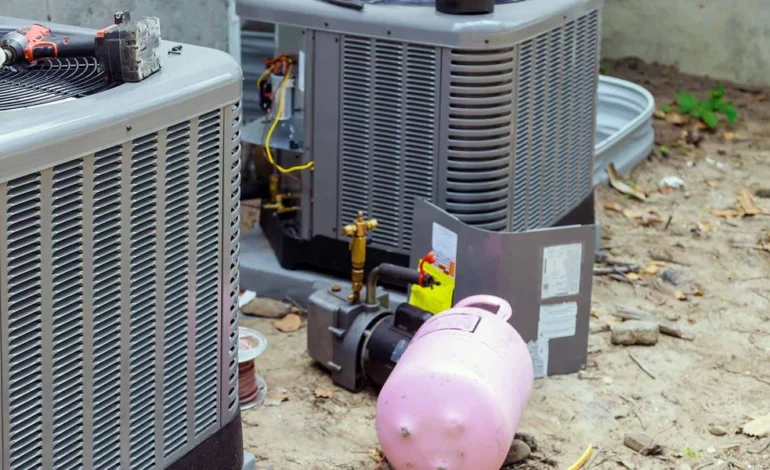

Most people never think about the fluid moving through their air conditioner. It travels through sealed copper lines, carries heat out of the house and releases it outside. It usually only comes up when a technician finds a leak or writes up a repair. That is changing. The refrigerant used in new home cooling equipment has switched, and the switch affects how older systems get serviced and how replacements get installed.
Where summers start in spring and last well into fall, this matters more than it would in a mild climate. A central system near the Atlantic coast can run for most of the year, and humid, salty air is hard on outdoor coils. Homeowners who call A/C Masters Enterprises or any other HVAC contractor for an estimate are now hearing terms like R-410A, R-454B and A2L. Knowing what those labels mean makes it much easier to judge a quote.
For roughly two decades, R-410A was the standard refrigerant in central air conditioners and heat pumps. It replaced R-22, which damaged the ozone layer. R-410A fixed the ozone problem but caused another one. When it escapes, it traps far more heat in the atmosphere than carbon dioxide does, with a global warming potential of about 2,088. Federal rules under the AIM Act now require new residential air conditioners and heat pumps manufactured from January 1, 2025 to use refrigerants with a much lower warming potential.
What the Change Means for Equipment Already Installed
Many people believe R-410A systems suddenly became illegal or impossible to repair. They did not. The rules target newly manufactured equipment, not the units already running outside millions of homes. Certified technicians can still buy, recover and reclaim R-410A and charge it into existing systems.
Replacement parts are still being made too. Condensing units, compressors and evaporator coils built with R-410A after the cutoff must carry a label saying they are only for servicing existing equipment. That keeps older systems repairable. In May 2026, federal regulators also dropped an earlier January 1, 2026 deadline that would have stopped the installation of leftover R-410A equipment built before 2025. That gives contractors more flexibility with the stock they already have.
What has changed is cost and supply. As manufacturing winds down, R-410A prices have become less predictable. A system that needs refrigerant added every summer is getting more expensive to keep running.
Meet the A2L Refrigerants
New equipment generally runs on R-454B or R-32. Both belong to a safety class called A2L, which means low toxicity and mild flammability. These refrigerants are hard to ignite and burn slowly. Even so, building codes and equipment standards were updated to account for them.
You will notice some of those changes inside the house. Many new air handlers include a refrigerant leak sensor. If it detects refrigerant, the system runs the blower to spread the refrigerant out and dilute it quickly. Technicians also use tools, recovery machines and cylinders rated for A2L work. The industry went through shortages of R-454B and its cylinders early in the transition.
The most important point for homeowners is that you can’t simply swap these refrigerants into an old system. An R-410A system cannot be topped off with R-454B or R-32, and different refrigerants should never be mixed in the same lines. Each one needs equipment designed around its pressures and oils.
Where Your Own System Fits
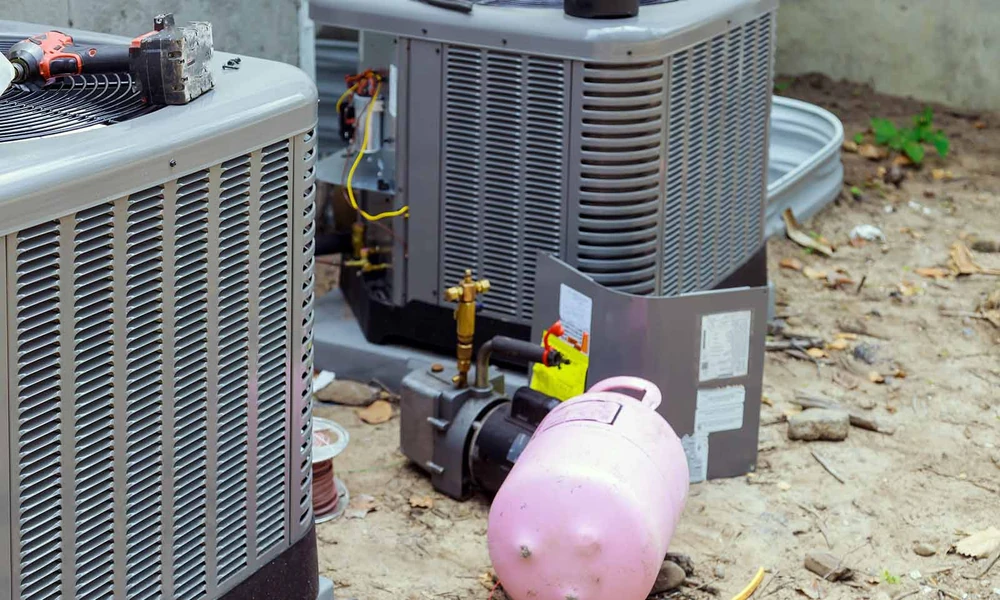
The refrigerant type is printed on the data plate of the outdoor unit. This is usually a metal or foil label near the service panel. Once you know which refrigerant you have, your situation will usually fall into one of three groups.
Older systems running R-22. These were typically installed before 2010. U.S. production and import of R-22 ended on January 1, 2020, so repairs now depend on recovered and reclaimed refrigerant, which is costly. You are not required to replace a working unit. The EPA’s guidance for homeowners confirms that existing R-22 equipment can keep running and be serviced. Still, a major leak or a failed compressor on one of these units usually makes replacement the better deal.
R-410A systems in decent shape. Most homes fall into this group right now. A well maintained unit can last for years. A single repair, such as a new capacitor or contactor or a leak fixed at a valve core, is often worth the money. The harder decisions come when the compressor fails or the coil leaks on a system that is already 12 to 15 years old.
New A2L systems. If you replace your system, expect the outdoor unit and the indoor coil to be replaced together. A new A2L condenser cannot be paired with an old R-410A coil, and you only get the efficiency on the label from a matched, rated pair. In some cases the existing refrigerant lines can be reused after testing and flushing, so ask about that during the estimate.
Why Leaks Deserve More Attention Now
In humid coastal regions, refrigerant leaks are a common reason systems stop cooling well. Salt in the air attacks the aluminum fins and copper tubing on outdoor coils. Indoor coils face a different threat called formicary corrosion. Chemicals from household cleaners, adhesives and building materials slowly eat pinholes through the copper tubing.
Small leaks show up gradually. The system runs longer to reach the thermostat setting and the air at the vents feels less cold. The suction line or indoor coil may frost over, and electric bills go up. A hissing or bubbling sound near the unit can point to a larger leak.
Adding refrigerant every year without finding the leak makes less sense than ever. You pay again for every pound that escapes, and leaked refrigerant harms the atmosphere. Technicians can find a leak with electronic detectors, bubble solution or a nitrogen pressure test. This costs more upfront, but it tells you whether you need a simple fix or a coil that is near the end of its life.
Making a Calm Repair or Replace Decision
The refrigerant switch does not mean every older system needs to go. It means you should ask a few more questions than you used to. Ask which refrigerant your unit uses and how much has been added over the past couple of years. Ask whether the leak has actually been found or only topped off. If replacement comes up, ask whether the quote covers both the outdoor unit and the matching indoor coil. Also ask whether the refrigerant lines will be tested or replaced, and how the new system handles leak detection.
A system that cools well and holds its charge can keep working for years, whatever refrigerant it uses. If a system needs regular refills, struggles in the afternoon heat or runs nonstop, that is a warning sign. Knowing which refrigerant it uses makes that warning easier to understand.
